


Call Center
02-518-0680
Call Center
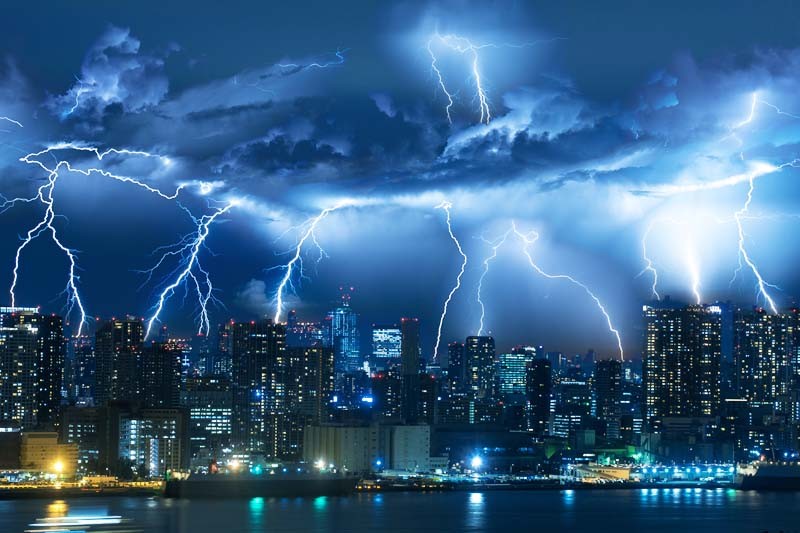
02-518-0680When lightning strikes a structure or lands close to one, it endangers people, the structure itself and everything inside it, and can bring internal systems down. The damage can spread to the surrounding area and affect the local environment. Over recent decades, scientists and engineers around the world have researched and developed lightning protection measures to keep life and property safe and to keep electrical and electronic systems stable, giving a fully rounded set of protection measures.
The Suntec Technology lightning protection system consists of:
Lightning Protection System
Surge Protection System
Lightning Warning System
Grounding System
We design, install and maintain air terminals and lightning protection equipment using modern, quality technology certified to international standards, at a fair price, and with insurance cover of 10 to 50 million baht.
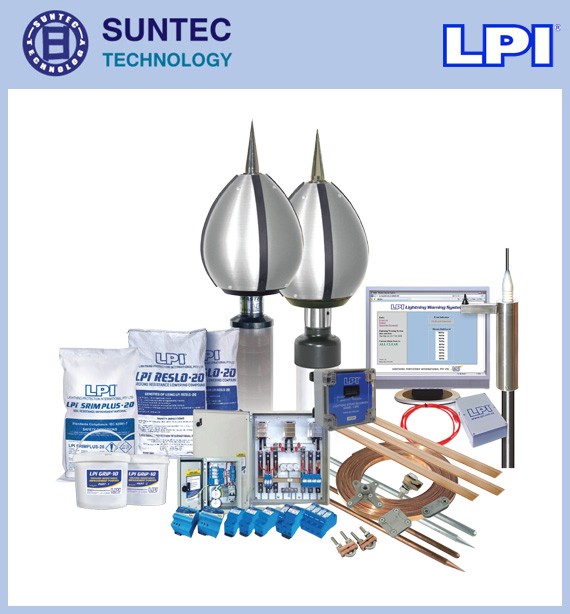
The lightning protection system (LPS) plays a vital part in reducing the damage a lightning strike can do to a building structure, and to the lives and property inside it and around it. If the protection system is not installed to standard, or is not inspected and maintained regularly, the building can still be at risk of lightning damage.
There are two standard-backed lightning protection systems:
1. The Faraday Cage system, backed by EIT, IEC 62305 and NFPA 780
2. The Early Streamer Emission (ESE) system, backed by NFC17-102
LPI air terminals, in both Early Streamer Emission (ESE) and conventional forms, meet standards such as NFC17-102, IEC 62305, IEC 62561 and AS/NZS 1768. They are tested in a high voltage laboratory and come with certificates and test reports for the relevant standards. After the lightning conductors are installed, the equipment can be checked with the LPI ESE Stormaster Tester and Lightning Counter Tester.
For our customers' peace of mind, we are glad to provide insurance cover of 10-50 million baht on every project where we install a lightning protection system.
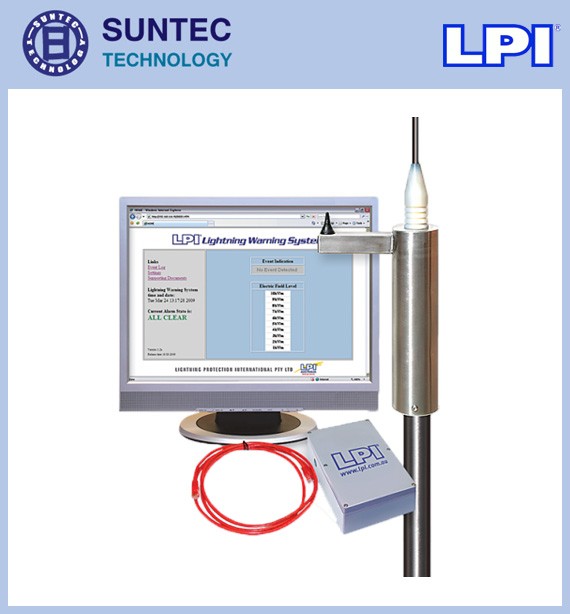
The lightning warning system is designed to warn people out in the open when there is a chance of a lightning strike in the area, so that they have time to move somewhere safe. The system detects lightning charge across an area up to 25 kilometres away. It raises a first-level warning when the charge moves within 10-25 kilometres. If the charge comes within 8-10 kilometres and grows stronger, the system sounds a siren so that anyone inside the detection area has time to move to safety.
It can be installed in a wide range of locations, such as:
• Golf courses
• Mines
• Construction sites
• Airports
• Ports
• Power plants
• Theme parks
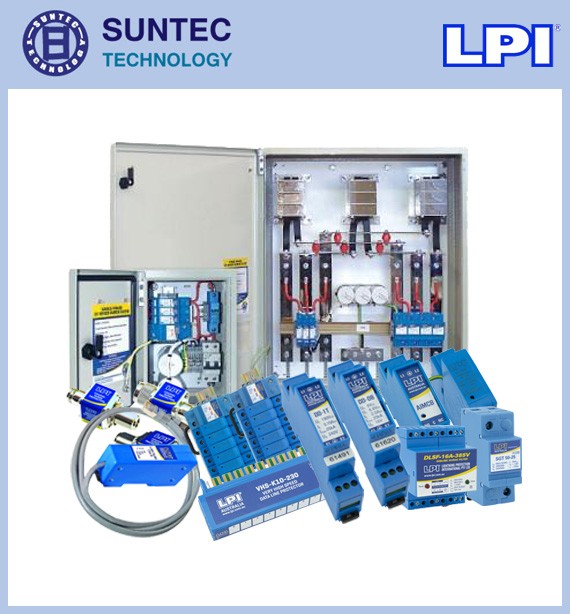
When lightning strikes a building structure or a conductor, or lands close to one, the resulting current and voltage are induced into power or signal conductors. That produces overvoltage in the electrical and electronic systems and damages the equipment connected to them. Overvoltage generated by the electrical system itself, such as short circuits and switching operations, can damage that equipment just as easily. To prevent this, a surge protection scheme has to be designed and surge protective devices (SPD) selected in line with international standards.
The standard divides surge protective devices into three classes:
SPD Class I handles lightning current with 10/350 µs and 8/20 µs waveforms
SPD Class II handles lightning current with the 8/20 µs waveform
SPD Class III handles lightning current and voltage with 8/20 µs and 1.2/50 µs waveforms
Surge protective devices fall into two types:
1. Power Line Surge Protective Devices
2. Data Line Surge Protective Devices
LPI surge protective devices can be applied under EIT, IEC and IEEE standards, and are tested to IEC 61643 and UL 1449, with test results and certificates provided.
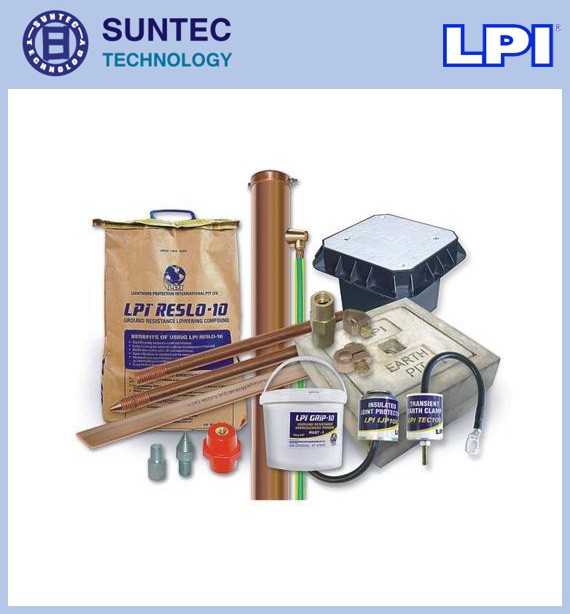
Earthing matters for electrical and electronic systems. The purpose of earthing and bonding is safety and electromagnetic compatibility (EMC). Earthing products and earth conductors come in a range of materials. As well as choosing standard-compliant earthing products, they have to suit the soil conditions, for the sake of both performance and service life. We also design, install and maintain these systems, and measure earth resistance and soil resistivity to inform the design.
What makes a good grounding system
• The earth conductor must have good electrical continuity and low earth resistance to standard
• Standard-compliant ground rods, for good conductivity and corrosion resistance
• Buried conductors should use permanent connections made by exothermic welding, welding or compression. Where clamping is used, extra corrosion protection measures should be added
• The earth conductor must be large enough to carry safely any short-circuit current that could arise in the system
• Impedance must be low enough to limit the voltage measured against earth and to let overcurrent protection devices in the circuit operate effectively
• There must be measures against the corrosion caused by joining dissimilar materials
LPI earthing products can be applied in designs following EIT, IEC, BS EN, NEC and IEEE standards, with properties conforming to IEC 62561 and UL 467, and with test results and certificates provided.
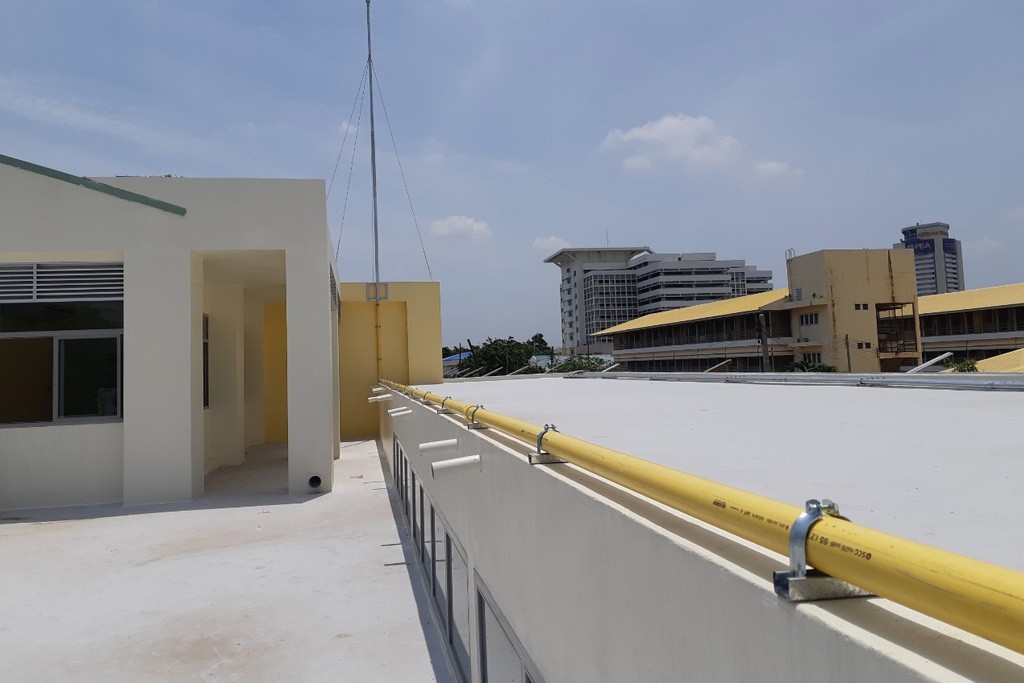
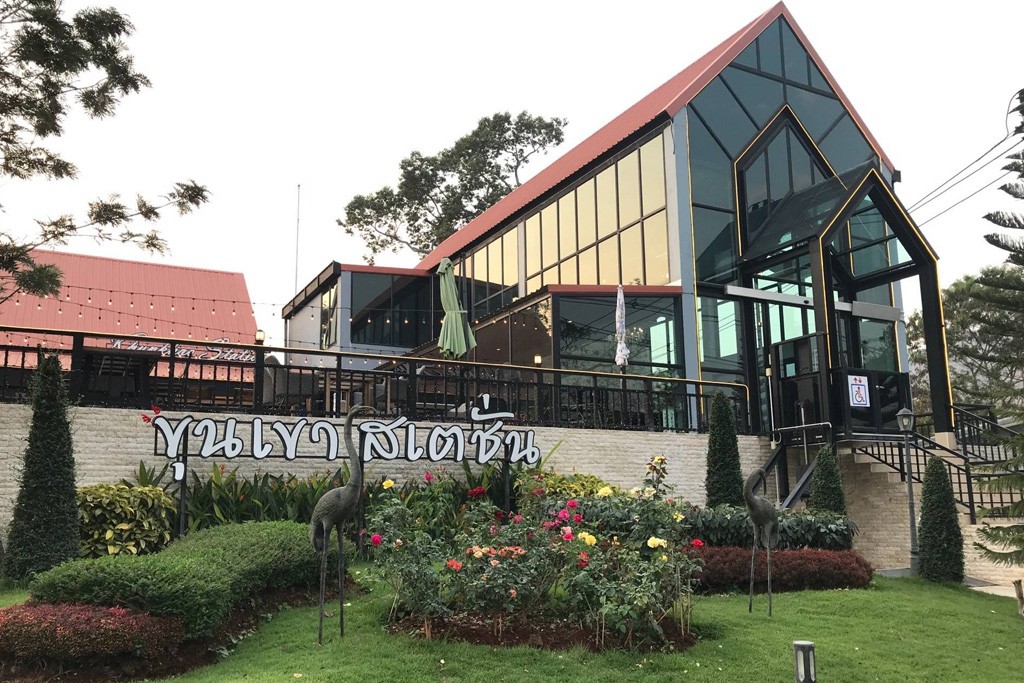
We have long designed and installed nurse call systems, fire alarm systems
and lightning protection systems for both private companies and government agencies.
It covers four sub-systems: the lightning protection system, the surge protection system, the lightning warning system and the grounding system. Details of each are in the list at the top of this page.
When lightning strikes a structure or lands nearby, it endangers people, the building itself and the equipment inside, and it can bring internal systems down. The damage can spread to the surrounding area and affect the local environment. Installing a system built to standard reduces the risk to life and property and keeps electrical and electronic systems stable.
Yes. Suntec installations come with insurance cover of between 10 and 50 million baht, depending on the type and size of the job.
Two types are backed by recognised standards: the Faraday Cage type, which follows EIT, IEC 62305 and NFPA 780, and the Early Streamer Emission (ESE) type, which follows NFC17-102.
A full service. We design, install and maintain air terminals and lightning protection equipment, using products certified to international standards at a fair price.
