Call Center
02-518-0680
Call Center
02-518-0680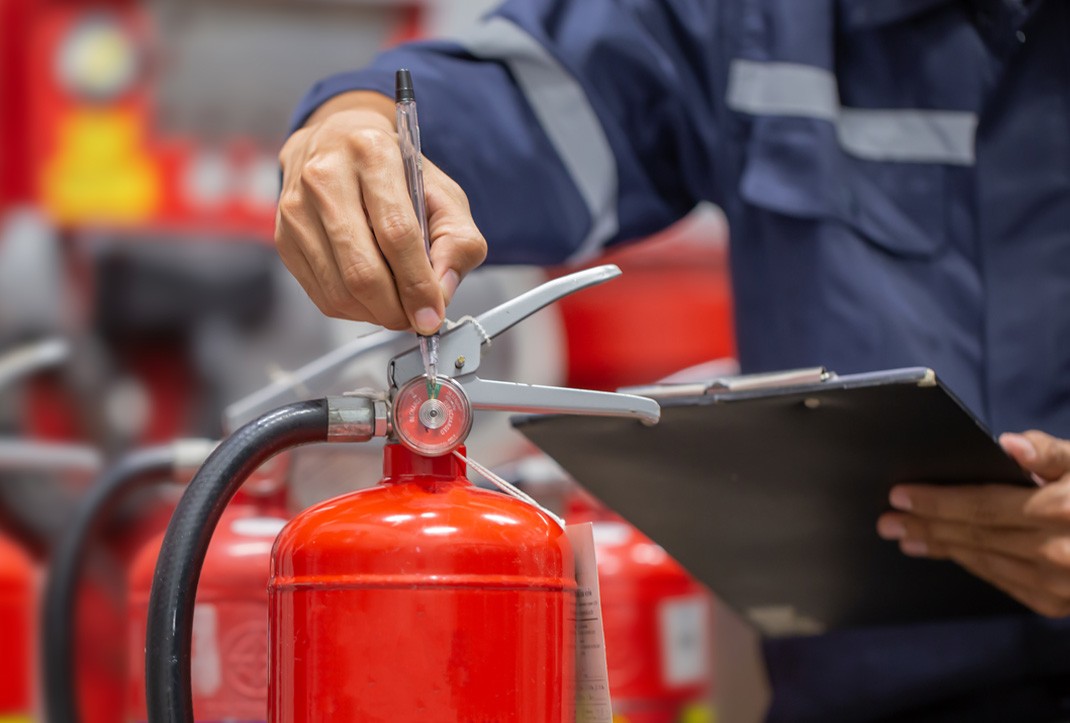
A firefighting system is one of the basic features of a building, and it helps limit the damage a fire causes, both directly and indirectly.
It lets the people inside a building know that a fire has broken out. In general it can be either automatic or manual. With a manual system, someone in the building has to pull the alarm to sound it, and simple instructions should be posted alongside it. An automatic system, meanwhile, can sense heat or smoke and send a high-pitched tone through the building to warn the occupants. Both kinds of alarm can also flash a light every second.
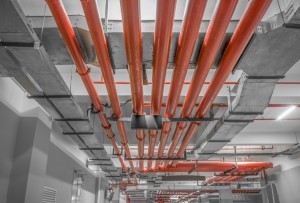
This is one of the key components of a firefighting system. Sprinkler systems are usually installed in tall or large buildings and in high-hazard occupancies. They are one of the most dependable ways to control a fire. When the heat of the fire releases the sprinkler head at its set temperature, water sprays down onto the fire below to bring the temperature and the smoke down. The system is at its most effective in the early stages of a fire.
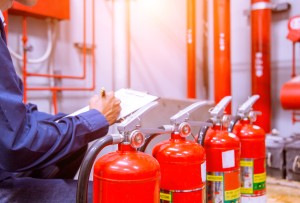
These are kept ready for first-response firefighting. Most fires start small and can be put out if the right extinguishing agent is applied in the right amount. Extinguishers are placed near building exits, in line with the policy of the Department of Disaster Prevention and Mitigation, so that occupants know where the safe exits and escape routes are.
This is installed in a building to help firefighters tackle a fire quickly. A standpipe system stores and carries water to speed up firefighting. Sometimes the fire water system includes the extra components it needs to work effectively, and those systems have to be maintained and tested regularly to keep them effective for the moment they are needed.
This can be used by occupants as well as firefighters in some cases, such as first-response firefighting. To relieve the pressure in the line, first attach the nozzle to the hose valve, then close the hose valve and open the nozzle. In an emergency you can follow the hose to a safe place, because hoses are generally installed near exits.
These are among the most effective firefighting systems in a building, and they come in several types.
• Gas systems suit data rooms, switch rooms and communication rooms best
• Kitchen suppression, also known as chemical foam, is designed specifically for commercial kitchens
• Water mist systems are used in large data rooms, and also work for flammable liquids and electrical rooms
• Foam deluge systems mainly suit large applications where you cannot use water or gas